Cerapterus laceratus: Mozambique's Beetle Tricks Ants with Pheromone Mimicry and Scalding Defense


Insect Information
Cerapterus laceratus: Mozambique's Beetle Tricks Ants with Pheromone Mimicry and Scalding Defense

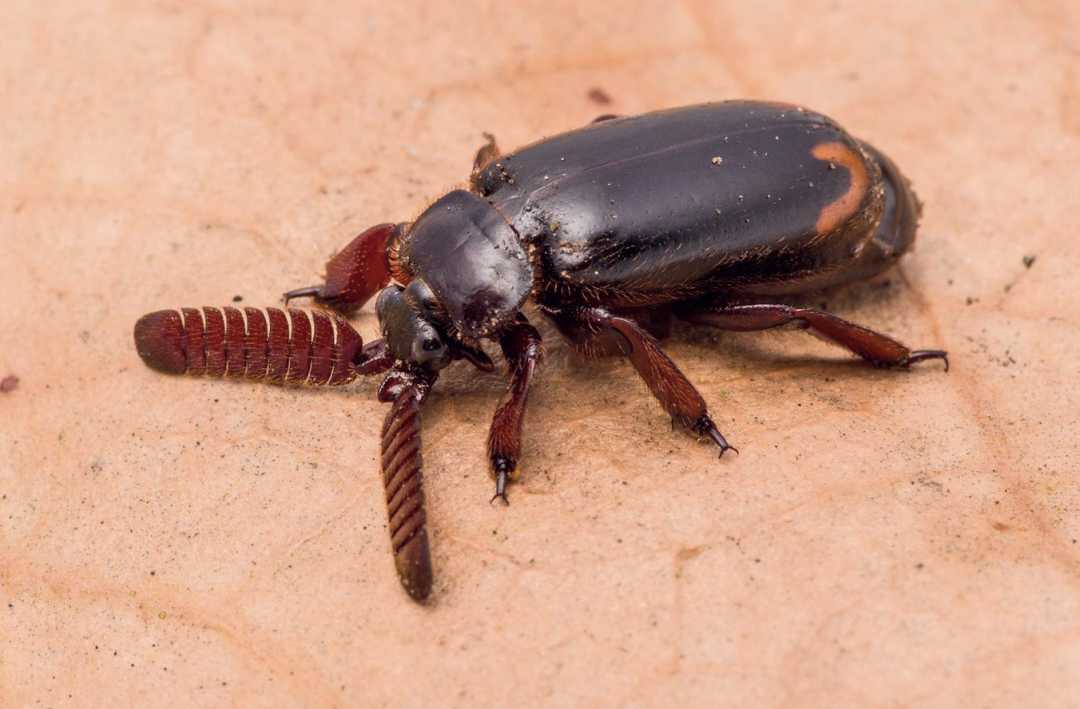
The adult and larval stages of Cerapterus laceratus, a rove beetle from Mozambique, have evolved a dual defense strategy that combines chemical trickery and fiery retaliation. By secreting compounds that mimic ant pheromones, these insects gain seamless integration into ant colonies, where they move freely without triggering aggression. This deceptive adaptation allows them to exploit ant resources while avoiding predation—a biological ruse rare in the insect world.


Beyond their scent-based subterfuge, Cerapterus laceratus shares a lethal trait with ground beetles: the ability to eject boiling-hot liquid from abdominal glands. When threatened, the beetle directs this caustic spray at predators, using a chemical reaction to generate temperatures that can burn or deter attackers. The combination of ant-mimicking pheromones and scalding defense makes this beetle a master of both stealth and combat in its tropical habitat.


Sporting distinctive lunar-shaped spots on its elytra, Cerapterus laceratus exemplifies nature’s ingenuity in survival tactics. Entomologists studying its relationship with ants note how the beetle’s body shape and movements further enhance its mimicry, allowing it to blend in with colony members. In Mozambique’s diverse ecosystems, this beetle stands as a testament to evolution’s capacity for creating complex, multi-layered defenses—where chemical deception and explosive retaliation converge to ensure survival.

Latest Stories
Entertainment News1 minute readAnya Taylor-Joy, born April 16, 1996, in Miami, Florida, holds U.S., British, and Argentine citizenship—a global background that mirrors her ability to inhabit diverse roles across film and television.
Animal Information1 minute readThe Atossa fritillary (Speyeria adiaste atossa), a butterfly once common in Southern California’s mountain regions, is feared extinct, with no confirmed sightings since 1959. Characterized by its broad wings decorated with elegant black spots, the species once thrived across the area’s rugged landscapes.
Entertainment News1 minute readMargot Robbie, the Australian actress, ranked 7th in FHM’s 2015 “World’s Sexiest Women” list, a testament to her striking allure that complements her dynamic career.
Sports News1 minute readWith the 2026 Milano Cortina Winter Olympics approaching, full schedules for Winter Sports World Cups and qualifying events are now available. The newly updated Sports Observer calendar includes 699 exclusive events for 2025 and 2026, plus select major competitions through 2034, serving as a key resource for athletes and fans.
Animal Information1 minute readRed foxes, scientifically known as Vulpes vulpes, are among the most widespread and adaptable carnivores on Earth, thriving across diverse habitats from the frozen tundras of the Arctic to the bustling outskirts of urban centers. Their iconic rusty-red coat, white underbelly, and bushy tail—often tipped with white—make them easily distinguishable, while their pointed ears and sharp snouts reflect their keen senses, critical for survival.
Sports News2 minute readThe International Olympic Committee (IOC) has announced the selection of seven research projects for the 11th edition of the Advanced Olympic Research Grant Programme, which is managed by the IOC’s Olympic Studies Centre (OSC). The chosen projects were selected for their academic quality and relevance to the IOC’s defined priority research areas for the Olympic Movement.
Social News1 minute readMyanmar, in Southeast Asia, evokes images of illicit activities like fraud and organ trafficking for many. Yet behind this grim reputation lies a land of immense potential: 680,000 square kilometers of diverse terrain—mountains, plateaus, and river deltas—fringed by 3,200 km of coastline, with the famed Golden Triangle within its borders.