Lytta nuttalli: North America's Most Dazzling Beetle Harbors a Toxic Secret


Insect Information
Lytta nuttalli: North America's Most Dazzling Beetle Harbors a Toxic Secret

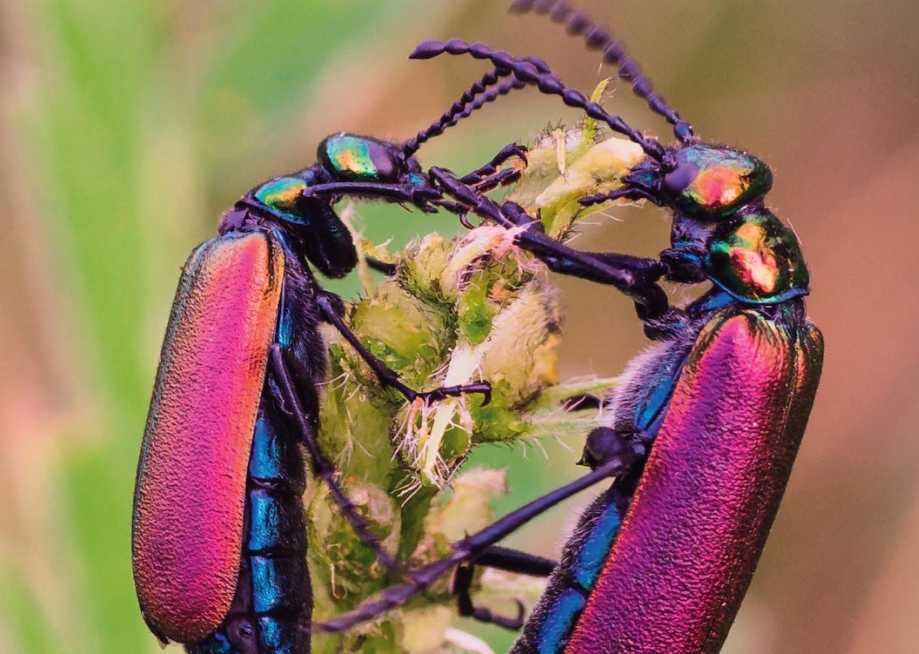
The Lytta nuttalli, or Nuttall's blister beetle, stands as a living jewel among North American insects, its iridescent exoskeleton shimmering in hues of emerald, bronze, and gold. Sunlight reflects off its elytra in a kaleidoscope of colors, making it a standout in meadows and prairies. Yet beneath this dazzling exterior lies a warning: this beetle’s beauty is paired with a potent defense mechanism.

When threatened, Lytta nuttalli secretes cantharidin, a toxic compound known as blister beetle toxin. Even a gentle touch can transfer this oily substance to human skin, causing painful blisters and irritation. The chemical serves as a natural deterrent against predators, from birds to small mammals, who learn to avoid the beetle’s vibrant coloration. Ironically, the same iridescence that attracts admiration also signals danger—a biological strategy known as aposematism.


Native to western North America, the beetle’s life cycle is tied to host plants like legumes, where adults feed and lay eggs. While its metallic sheen may tempt observers to reach out, entomologists stress caution: handling Lytta nuttalli or even brushing against it inadvertently can lead to skin reactions. This striking beetle exemplifies nature’s dual nature—where aesthetic marvels often coexist with survival strategies, reminding us to admire wildlife from a respectful distance.
Latest Stories
Entertainment News1 minute readSalma Hayek’s journey to becoming a global beauty began with small, intentional touches—her grandmother tended to her eyelashes and hair from childhood, nurturing the allure that would later define her. She left college to pursue acting, a bold choice that set her on a path to stardom.
Travel News2 minute readNestled along the Atlantic coast of Picardy in northern France, the Baie de Somme stands out as a unique ecosystem and year-round sanctuary for seal populations. Comprising marshes, mudflats, and sandbars, this triangular expanse serves as a vital stopover for migratory birds and hosts one of Europe's largest colonies of harbor seals (Phoca vitulina), attracting tens of thousands of visitors annually to witness its natural splendor. Natural Heritage and Ecol
Industry News1 minute readForeign media reports that Nvidia and AMD have received U.S. government support to restart AI chip exports to China. Nvidia announced it will resume selling the China-customized H20 chip and launch a new compliant product, the RTXPRO GPU. CEO Jensen Huang stated in Beijing that the Chinese market is "vital" to the company, with H20 ready: "We are very pleased to ship as soon as possible."
Sports News1 minute readSports emerged as a key focus at the 4th International Development Finance Conference, where International Olympic Committee (IOC) Member HRH Prince Feisal Al Hussein emphasized that sports are far more than a form of entertainment—they act as a powerful tool for economic and social transformation.
Sports News2 minute readDespite a string of failed bid attempts in recent years, Germany remains enthusiastic about redefining its relationship with the Olympic Movement through bids from Berlin, Hamburg, Munich, and the Rhine-Ruhr region. These cities are competing to host a Summer Olympics between 2036 and 2044, while actively seeking public backing.
Travel News2 minute readLaunched in 1997 by French entrepreneur Michel Guyot and Maryline Martin, the project aims to replicate a 13th-century fortress through “experimental archaeology,” exploring how medieval artisans built without modern tools. Situated in an abandoned sandstone quarry, the site offers stone, timber, and water—ideal for recreating medieval construction conditions.
Travel News1 minute readMer de Glace, known as the largest glacier in France, is a remarkable natural wonder. Located in the Chamonix Valley of the Mont Blanc Massif, it stretches about 7 kilometers in length and reaches a depth of approximately 200 meters.