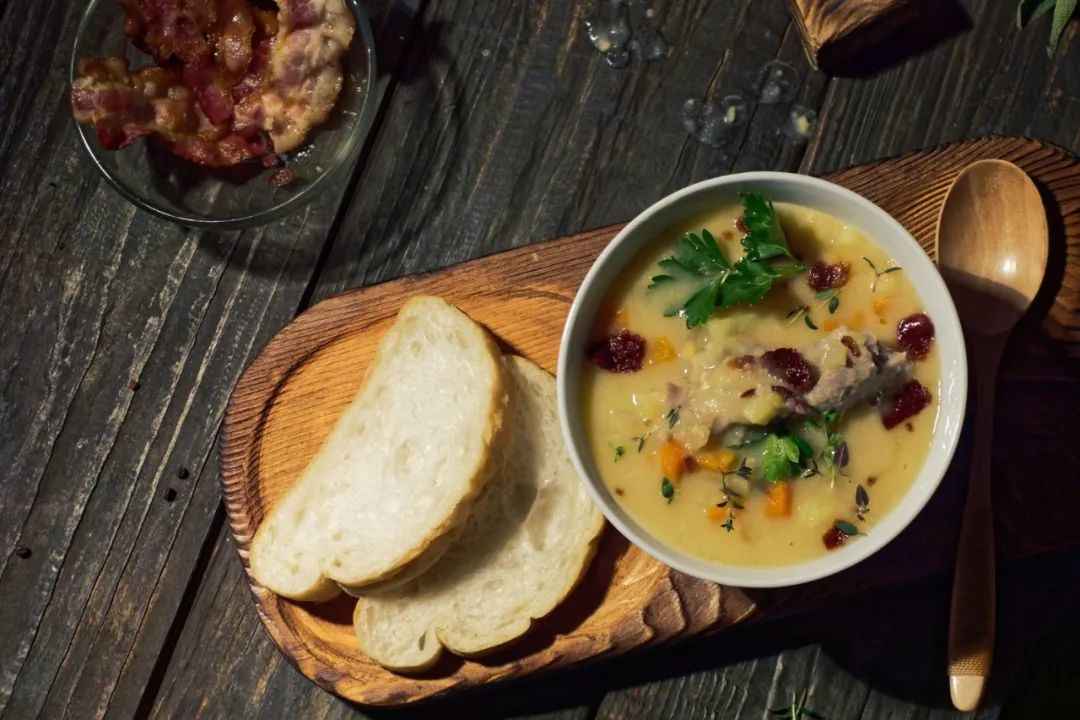
Split Pea Soup, a beloved dish with a rich historical backstory, is said to have been invented by French explorer Samuel de Champlain after he led the first expedition to land on Canadian soil. This culinary creation has since evolved into a signature dish that beautifully blends French and Canadian culinary traditions, captivating taste buds with its hearty composition and comforting flavors.
The magic of Split Pea Soup lies in its simple yet harmonious combination of ingredients. Chunky pieces of celery and carrots form the vegetable base, adding a satisfying crunch and natural sweetness to the soup. Tender chunks of ham bring a savory, smoky depth, while a touch of thyme infuses the dish with a subtle earthy aroma, elevating the overall flavor profile. These elements simmer together slowly, allowing their tastes to meld into a smooth, rich broth that is both nourishing and deeply satisfying.
A bowl of this delicious soup is traditionally served with thick slices of crusty bread, which serve a dual purpose. Not only do they provide a delightful textural contrast to the creamy soup, but they also act as the perfect tool for sopping up every last drop of the flavorful broth. Whether enjoyed on a chilly winter day or as a comforting meal any time of the year, Split Pea Soup offers a warm and inviting dining experience that reflects the culinary heritage and hospitality of both France and Canada.
This dish is more than just a meal; it is a piece of history and a symbol of cultural fusion. As it continues to be savored by food lovers around the world, Split Pea Soup stands as a testament to the way food can bridge cultures and create lasting traditions that endure through the ages.
Source: Images from the Internet, if there is any infringement, please contact the removal of
The Tale and Temptation of Split Pea Soup: A Blend of French and Canadian Cuisine
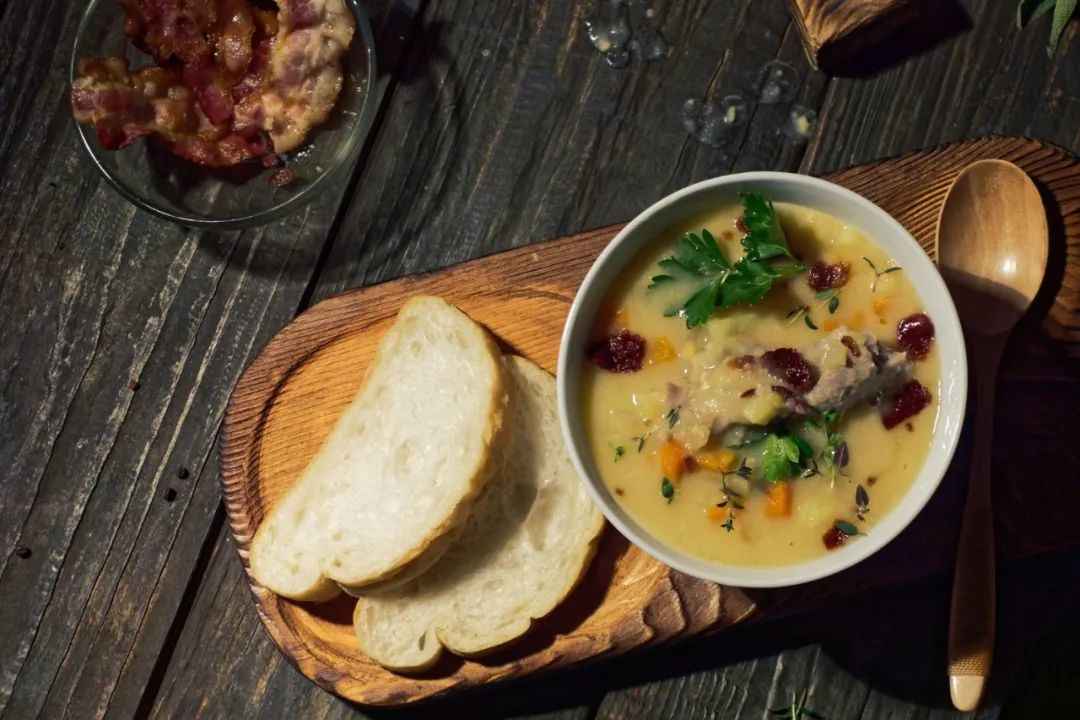
Split Pea Soup, a cherished dish with a fascinating historical narrative, is rumored to have been created by French explorer Samuel de Champlain following his first expedition's landing on Canadian territory. Over time, this culinary masterpiece has become a quintessential dish that seamlessly integrates French and Canadian culinary styles, enchanting palates with its robust ingredients and comforting taste.
The allure of Split Pea Soup stems from its straightforward yet perfectly balanced ingredient combination. Generous chunks of celery and carrots form the vegetable foundation, imparting a satisfying crispness and natural sweetness to the soup. Tender pieces of ham add a savory, smoky dimension, while a sprinkle of thyme lends a gentle earthy fragrance, enhancing the overall flavor. These components are slowly simmered together, enabling their flavors to merge into a smooth, rich broth that is both nourishing and deeply comforting.
A bowl of this delectable soup is typically accompanied by thick slices of rustic bread, which serve two purposes. They not only offer a delightful textural contrast to the creamy soup but also make the ideal utensil for mopping up every bit of the flavorful broth. Whether enjoyed on a cold winter's day or as a comforting meal at any time, Split Pea Soup provides a warm and welcoming dining experience that embodies the culinary heritage and warmth of both France and Canada.
This dish is far more than just a meal; it is a slice of history and a symbol of cultural integration. As it continues to be relished by food enthusiasts globally, Split Pea Soup serves as a reminder of how food can bring cultures together and create enduring traditions that stand the test of time.