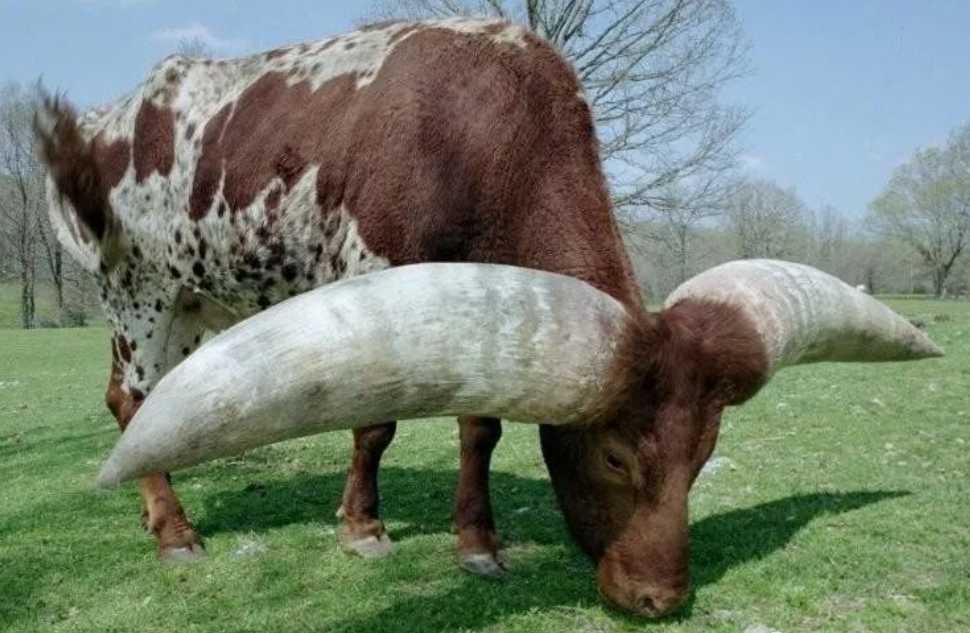
Native to southern Africa, the Watusi cattle (also known as Ankole-Watusi) command attention with their extraordinary horns—measuring up to 2.4 meters from tip to tip when fully grown. More than just a defensive weapon, these iconic appendages house a biological marvel: a honeycomb structure that acts as a natural radiator, cooling the bloodstream before it circulates through the body.
-
The Science of Horned Thermoregulation
Each horn contains a network of blood vessels surrounded by porous, honeycomb-like bone. As warm blood flows through the horns, heat dissipates into the air via convection, lowering the animal’s core temperature. This adaptation is crucial in Africa’s scorching savannas, where other cattle species often struggle with heat stress. The horns’ spiral shape further increases surface area for efficient cooling.
-
Size and Structural Adaptations
Bulls’ horns are larger and more symmetric, while cows’ tend to be smaller and more upward-curving. Despite their imposing size (some pairs weigh over 45 kg), the horns are surprisingly lightweight due to their honeycomb interior. The Watusi’s lean build and short coat further aid heat dissipation, complementing its horned cooling system.
-
Defense and Social Dynamics
Beyond thermoregulation, horns serve as formidable weapons against predators like lions and hyenas. During mating season, bulls use their horns in ritualized clashes, demonstrating dominance without causing serious injury. The breed’s calm temperament and agility allow it to navigate rocky terrain while foraging on sparse vegetation.
-
A Sacred Symbol in African Culture
For tribes like the Tutsi and Hima, Watusi cattle are symbols of wealth, status, and spiritual significance. Horns are often carved and decorated, while the animals feature in traditional ceremonies and folklore. In modern times, they are prized for their hardiness and disease resistance, playing a vital role in sustainable ranching across Africa.
-
Thriving in a Changing Landscape
While not endangered, the Watusi faces competition from commercial breeds in some regions. Conservation efforts focus on preserving its unique genetics, with organizations like the African Watusi Cattle Society promoting sustainable breeding. Their ability to thrive in arid environments makes them increasingly important for climate-resilient agriculture.
-
Global Appreciation for a Horned Wonder
In recent years, the Watusi has gained popularity in zoos and exotic farms worldwide, admired for its striking appearance and evolutionary ingenuity. Scientists continue to study its horn structure, inspired by its natural cooling system for innovations in architectural design and thermal management technology.
In the sun-baked savannas of Africa, the Watusi cattle stands as a testament to nature’s ability to craft both beauty and function. Its colossal horns, evolved over millennia to conquer heat and threats, remind humanity that in the animal kingdom, survival often wears the most spectacular disguises