Honey Badgers: The Fearless 'Mellivora' That Take On Lions and Snack on Venomous Snakes


Animal Information
Honey Badgers: The Fearless 'Mellivora' That Take On Lions and Snack on Venomous Snakes

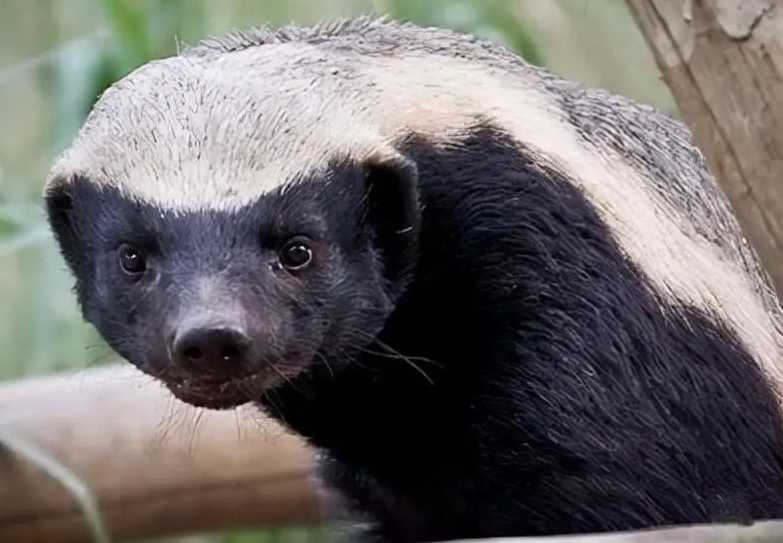
Known worldwide as the "honey badger" or the internet-famous "Pingtouge," Mellivora capensis has earned a reputation for unmatched bravery and a diet that defies logic. These stocky mammals, native to Africa, Asia, and the Middle East, are infamous for charging lions, tussling with hyenas, and even munching on cobras and vipers as if they were mere snacks.


A Fearless Predator with Supernatural Resilience

Honey badgers owe their fearlessness to a combination of physical adaptations and sheer tenacity. Their loose, thick skin is nearly impenetrable to predator bites and snake fangs, while powerful jaws and sharp claws allow them to rip through tough hides and venomous scales. When confronting a lion, a honey badger will arch its back, emit a growl, and lunge at the predator’s face—a tactic that often startles larger animals into retreat. As for snakes, their immune system is highly resistant to venom, enabling them to survive bites that would kill most mammals. In one recorded incident, a honey badger was seen devouring a 1.5-meter black mamba within minutes, barely pausing as the snake thrashed.

A Diet and Lifestyle Defying All Odds

Beyond snakes, honey badgers are opportunistic omnivores, feasting on honey (hence their name), rodents, tortoises, and even carrion. They use their strong forelimbs to dig up burrows or break open beehives, enduring hundreds of bee stings without flinching. Their intelligence is equally remarkable: they’ve been observed using tools like rocks to crack open eggs and solving complex puzzles in captivity. Despite weighing just 9–16 kg, they dominate ecosystems through sheer aggression, earning the Guinness World Record for "the most fearless animal."


Conservationists note that while honey badgers are not endangered, their habitat is threatened by human expansion. Yet their legend persists—from African folklore to viral videos— as a symbol of unyielding defiance. For scientists, they represent an evolutionary marvel: a creature that has turned every vulnerability into a strength, proving that in the wild, size and venom are no match for a fearless spirit and a set of razor-sharp claws.

Latest Stories
Entertainment News1 minute readAnya Taylor-Joy, born April 16, 1996, in Miami, Florida, holds U.S., British, and Argentine citizenship—a global background that mirrors her ability to inhabit diverse roles across film and television.
Animal Information1 minute readThe Atossa fritillary (Speyeria adiaste atossa), a butterfly once common in Southern California’s mountain regions, is feared extinct, with no confirmed sightings since 1959. Characterized by its broad wings decorated with elegant black spots, the species once thrived across the area’s rugged landscapes.
Entertainment News1 minute readMargot Robbie, the Australian actress, ranked 7th in FHM’s 2015 “World’s Sexiest Women” list, a testament to her striking allure that complements her dynamic career.
Sports News1 minute readWith the 2026 Milano Cortina Winter Olympics approaching, full schedules for Winter Sports World Cups and qualifying events are now available. The newly updated Sports Observer calendar includes 699 exclusive events for 2025 and 2026, plus select major competitions through 2034, serving as a key resource for athletes and fans.
Animal Information1 minute readRed foxes, scientifically known as Vulpes vulpes, are among the most widespread and adaptable carnivores on Earth, thriving across diverse habitats from the frozen tundras of the Arctic to the bustling outskirts of urban centers. Their iconic rusty-red coat, white underbelly, and bushy tail—often tipped with white—make them easily distinguishable, while their pointed ears and sharp snouts reflect their keen senses, critical for survival.
Sports News2 minute readThe International Olympic Committee (IOC) has announced the selection of seven research projects for the 11th edition of the Advanced Olympic Research Grant Programme, which is managed by the IOC’s Olympic Studies Centre (OSC). The chosen projects were selected for their academic quality and relevance to the IOC’s defined priority research areas for the Olympic Movement.
Social News1 minute readMyanmar, in Southeast Asia, evokes images of illicit activities like fraud and organ trafficking for many. Yet behind this grim reputation lies a land of immense potential: 680,000 square kilometers of diverse terrain—mountains, plateaus, and river deltas—fringed by 3,200 km of coastline, with the famed Golden Triangle within its borders.