Peru's Mysterious Geoglyphs Abound


Cultural News
Peru's Mysterious Geoglyphs Abound

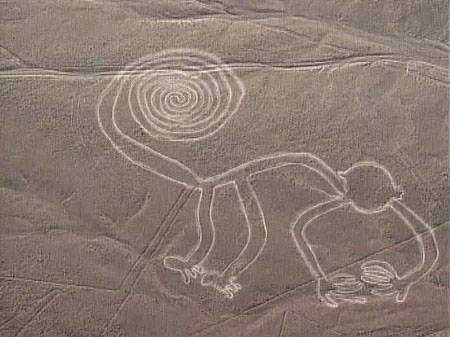
In the vast and arid Nazca desert of southern Peru, a remarkable phenomenon has intrigued the world for decades - an abundance of strange and mysterious geoglyphs. These geoglyphs, known as the Nazca Lines, were created between 500 BC and 500 AD. The local people made them by making depressions or shallow incisions in the desert floor, removing pebbles and exposing different - colored dirt.


There are two main phases in the creation of these lines. The Paracas phase, from 400 to 200 BC, and the Nazca phase, from 200 BC to 500 AD. In recent years, with the help of modern technology such as drones, between 80 and 100 new figures have been discovered. Archaeologists are confident that there are still more hidden among the desert sands.


The lines are incredibly diverse. While most run straight across the landscape, there are also elaborate figurative designs of animals like hummingbirds, spiders, fish, condors, monkeys, and plants. The combined length of all the lines exceeds 1,300 km (800 mi), covering an area of about 50 km² (19 sq mi). Some of these shapes are best seen from the air, at around 500 m (1,600 ft), although they can also be glimpsed from the surrounding foothills. Scholars have long debated the purpose of these designs, but many believe they held religious significance for the ancient people who created them. In 1994, the Nazca Lines were designated as a UNESCO World Heritage Site, highlighting their global importance and mystery.

Latest Stories
Industry News1 minute readTikTok Shop’s US mid-year promotion has kicked off with a historic first-week performance, breaking records across multiple business models and product categories, according to updates on July 18.
Industry News1 minute readRecent leaked reports suggest that Apple's upcoming ultra-thin iPhone 17 Air will be equipped with a battery capacity of approximately 2,800 mAh, a figure that not only falls below the industry-standard 3,000 mAh threshold but also smaller than the battery capacities of all models in the current iPhone 16 series.
Industry News1 minute readThe Office of the United States Trade Representative (USTR) announced the initiation of a Section 301 investigation into Brazil. The probe will examine whether Brazil’s policies and practices in areas such as digital trade, electronic payment services, "unfair" preferential tariffs, intellectual property protection, ethanol market access, and deforestation-related measures negatively impact U.S. trade interests.
Animal Information2 minute readIn the arid semi-deserts of the Horn of Africa lives an elegant and resilient creature—the Somali wild ass (Equus africanus somaliensis). As one of the wild ancestors of modern domestic donkeys, they once thrived in the dry grasslands and hills of Ethiopia, Eritrea, and Somalia. However, a combination of climate change, habitat loss, and human activities is pushing this species to the brink of extinction.
Entertainment News1 minute readIndie favorite Kristen Stewart, known for collaborations with Kelly Reichardt and Olivier Assayas, steps behind the camera for The Chronology of Water, premiering in Un Certain Regard. Adapted from Lydia Yuknavitch’s memoir, the film has earned early acclaim.
Entertainment News1 minute readAishwarya Rai, often called India’s “eternal beauty,” is a former Miss World whose allure has transcended decades, making her one of India’s most beloved and influential celebrities.
Travel News2 minute readPerched above the rolling vineyards of Solutré-Pouilly in southern Burgundy, France, the Roche de Solutré stands as a testament to nature’s artistry and humanity’s ancient legacy. This 493-meter limestone monolith, designated a "Grand Site de France," dominates the landscape with its dramatic cliffs, while its slopes cradle some of Burgundy’s most revered vineyards.