Somali Wild Ass: East Africa’s Critically Endangered "Living Fossil" Faces Extinction Crisis


Animal Information
Somali Wild Ass: East Africa’s Critically Endangered "Living Fossil" Faces Extinction Crisis

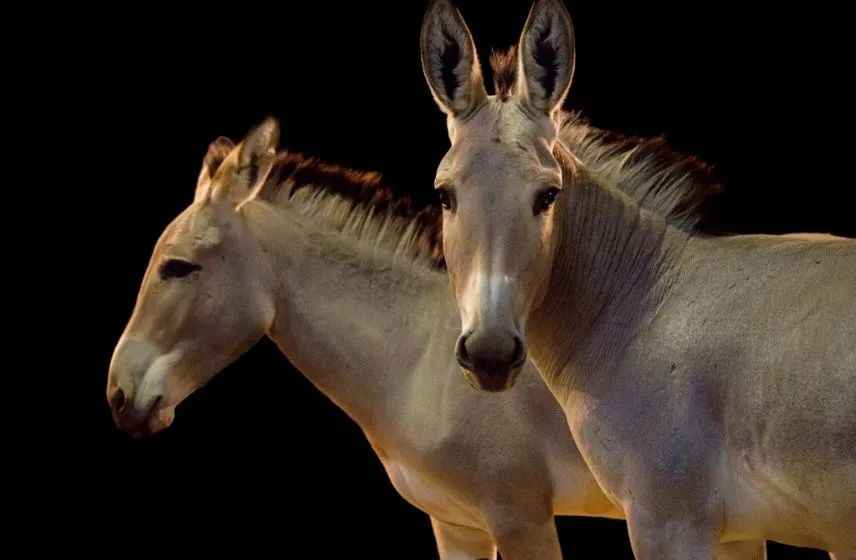
In the arid semi-deserts of the Horn of Africa lives an elegant and resilient creature—the Somali wild ass (Equus africanus somaliensis). As one of the wild ancestors of modern domestic donkeys, they once thrived in the dry grasslands and hills of Ethiopia, Eritrea, and Somalia. However, a combination of climate change, habitat loss, and human activities is pushing this species to the brink of extinction.

Survival Struggles: Double Jeopardy of Drought and Conflict

The Horn of Africa has experienced a marked increase in drought frequency and intensity over the past two decades, directly degrading the Somali wild ass’s habitat. Shrinking grasslands force them to compete with livestock for limited water and forage, exacerbating malnutrition and disease risks. For instance, the 2021 drought in northeastern Kenya killed at least 200 Somali giraffes, a fate mirrored in wild ass populations.


Warfare and communal conflicts further escalate threats. Illegal hunting persists due to weapon proliferation in parts of Somalia and Ethiopia, where their meat and body parts are sought for food and traditional medicine. Herders also kill them to protect livestock, while genetic purity is compromised by hybridization with domestic donkeys.

Ecological Value and Conservation Efforts

As a keystone species in arid ecosystems, Somali wild asses dig "ass wells" to access groundwater, inadvertently providing water sources for other animals and enhancing biodiversity. This behavior is critical amid desert expansion caused by climate change, even fostering plant seedling growth.


International efforts to save them include captive breeding and habitat protection. The UK’s Marwell Zoo recently celebrated a successful birth, offering hope for population survival. In Africa, Kenya’s Hirola Conservation Programme employs community collaboration, establishing reserves, providing emergency water, and combating diseases to balance wild ass and human needs. However, the IUCN Red List estimates fewer than 1,000 remain in the wild, with some sources suggesting less than 200, underscoring the urgency.

Future Outlook: The Long Road from "Crisis" to "Recovery"

Protecting Somali wild asses requires transboundary cooperation and long-term investment. Experts advocate expanding protected areas, strengthening anti-poaching patrols, and integrating communities into conservation education. For example, community-led monitoring programs in northern Ethiopia have shown initial success. Genetic studies also highlight their unique divergence from domestic donkeys, underscoring their irreplaceable value for biodiversity research
Latest Stories
Entertainment News1 minute readIndie favorite Kristen Stewart, known for collaborations with Kelly Reichardt and Olivier Assayas, steps behind the camera for The Chronology of Water, premiering in Un Certain Regard. Adapted from Lydia Yuknavitch’s memoir, the film has earned early acclaim.
Travel News2 minute readNestled in the Vosges Mountains of Haute-Saône, France, the Plateau des Mille Etangs (Thousand Ponds Plateau) is emerging as a top destination for discerning hikers. Shaped by glaciers and human history, this 220 km² region boasts a surreal landscape of lakes, forests, and peat bogs, earning it the nickname "Little Finland" .
Animal Information1 minute readThe four-eyed turtle (Sacalia quadriocellata), a rare freshwater reptile native to Southeast Asia, has captured global attention for its distinctive appearance and critical endangered status. Contrary to its common name, this small turtle—typically measuring under 20 centimeters in length—possesses only two functional eyes. Its moniker derives from four striking ocelli (eye-like spots) atop its head: two pairs of bright yellow markings ringed with dark pigment, resembling additional eyes and forming one of nature’s most intriguing examples of mimicry.
Animal Information1 minute readWELLINGTON, July 17 (Xinhua) -- The Okarito brown kiwi (Apteryx rowi), a flightless bird endemic to New Zealand, is teetering on the brink of a growing survival crisis. Classified as "Vulnerable" by the International Union for Conservation of Nature (IUCN), this unique species is grappling with relentless threats from invasive predators like stoats, which have wreaked havoc on their nests and chicks, putting the entire population at risk.
Sports News1 minute readThe International Council of Arbitration for Sport (ICAS) released its 2024 financial statements, clarifying a frequently asked question: How much of the Court of Arbitration for Sport (CAS) funding comes from the IOC? Total operating revenue reached 24.15 million Swiss francs (CHF) (1 CHF = 1.26 USD), with a clear breakdown of sources.
Sports News1 minute readThe Scalo Romana Olympic Village is set to welcome athletes for this winter’s games, having been completed in 900 days—one month ahead of schedule, according to Designboom. The milestone marks a key step in preparations for the Milano Cortina 2026 Winter Olympics.
Industry News1 minute readThe global toy market is poised for steady growth, projected to rise from $316.14 billion in 2024 to $445.97 billion by 2032, at a compound annual growth rate (CAGR) of 4.33%, according to latest insights.