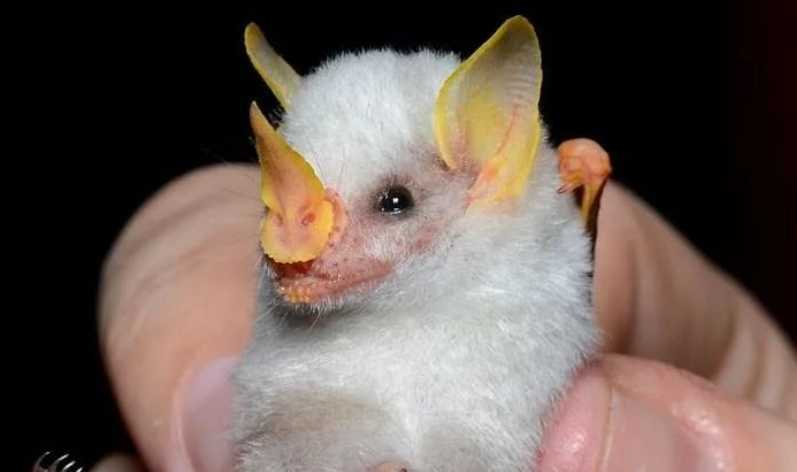
Hailed as the world’s cutest bat, the Honduran white bat (Ectophylla alba) charms with its snowy-white fur, vibrant orange nose, ears, and wings—a whimsical color palette that defies all bat stereotypes. Native to the rainforests of Central America (Honduras, Nicaragua, Costa Rica, and Panama), this tiny chiropteran measures just 3–5 cm long, making it one of the smallest bat species on Earth. Its cottony appearance and miniature size have earned it a reputation as the "teddy bear of the bat world."
-
Plush White Fur and Vibrant Accents
The bat’s most striking feature is its dense, velvety white fur, which provides camouflage among the pale undersides of heliconia leaves—the very plants it transforms into "tents" for shelter. Contrasting sharply with its snowy coat are bright orange facial features and wing membranes, likely resulting from carotenoid pigments in its diet of ripe fruits. This coloration may serve as a visual signal during social interactions or mating displays.
-
Tiny Size and Specialized Feeding
Weighing less than a nickel, the Honduran white bat is a frugivore, primarily consuming the pulp of figs and other tropical fruits. Its small, pointed snout and sharp teeth are adapted for piercing fruit skins, while its modified palate allows it to extract nutrients without ingesting seeds—making it an important seed disperser in rainforest ecosystems.
-
Architects of Leaf Tents
Unlike most bats that roost in caves or tree hollows, this species creates shelters by biting the veins of large heliconia or banana leaves, causing them to fold into tent-like structures. These leaf tents provide protection from predators and rain, while also regulating temperature and humidity for the colony.
-
Social Structure in Miniature
Honduran white bats live in small family groups of 2–12 individuals, led by a dominant male. Females give birth to a single pup annually, which clings to its mother’s fur until it can fly. The colony’s tight-knit behavior and shared roosting habits contribute to their endearing reputation, as they huddle together in their leaf tents, appearing as a cluster of fluffy white balls.
-
Vulnerability in a Changing Landscape
Though currently listed as "Least Concern" by the IUCN, the Honduran white bat faces threats from deforestation and habitat fragmentation. Its reliance on specific leaf types for roosting makes it sensitive to changes in rainforest vegetation. Pesticide use in banana plantations also poses a risk, as contaminated fruits can harm the bats directly or disrupt their food chain.
-
Unsung Heroes of the Rainforest
As frugivores, these bats play a crucial role in dispersing seeds, aiding reforestation and maintaining plant diversity. Their leaf-tent construction also creates microhabitats for other small creatures, such as insects and frogs, highlighting their importance as ecosystem engineers.
In the lush canopies of Central America, the Honduran white bat proves that bats can be adorable—and vital to healthy ecosystems. Its cottony white fur and vibrant orange features remind us that nature’s most charming creations often hide in plain sight, waiting to dispel myths and inspire wonder. As we work to protect its rainforest home, we preserve not just a "cute" bat, but a key player in the intricate web of tropical life.