Pot-au-feu: France's Timeless Stew Celebrating Simplicity and Heritage


Life News
Pot-au-feu: France's Timeless Stew Celebrating Simplicity and Heritage

In the culinary landscape of France, few dishes carry the weight of tradition and comfort quite like pot-au-feu. More than just a meal, this iconic stew has woven itself into the fabric of French culture, captivating palates for centuries with its humble yet profound combination of ingredients.


In the culinary landscape of France, few dishes carry the weight of tradition and comfort quite like pot-au-feu. More than just a meal, this iconic stew has woven itself into the fabric of French culture, captivating palates for centuries with its humble yet profound combination of ingredients.


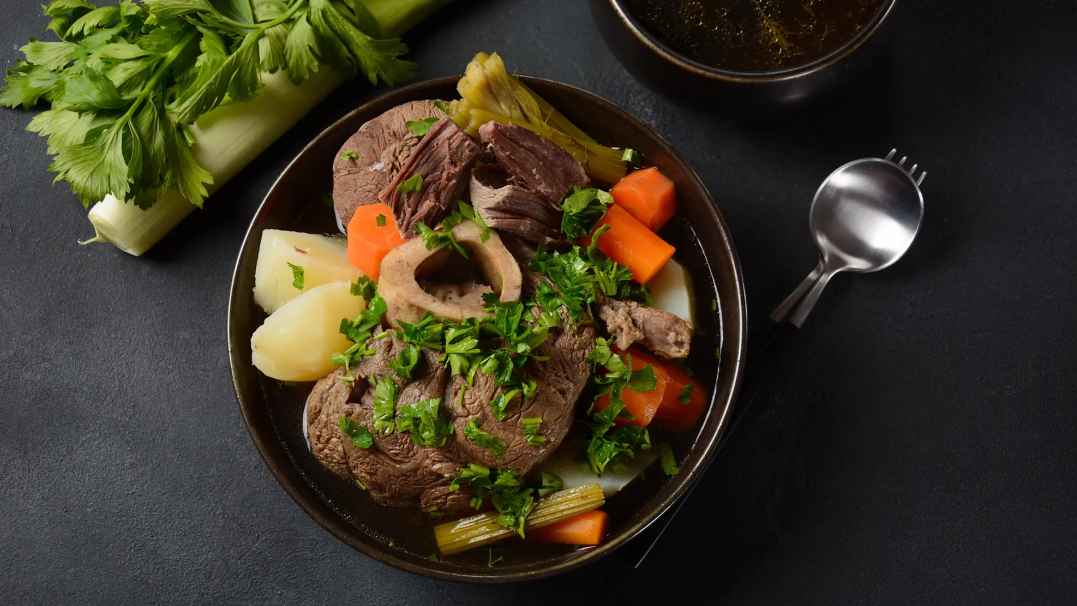
At its core, pot-au-feu is a masterclass in simplicity. The dish revolves around slow-cooked meat—typically cuts of beef like shank or brisket, chosen for their ability to tenderize and infuse depth into the broth—simmered gently with a medley of root vegetables. Parsnips, turnips, and celery form the vegetable base, their earthy sweetness melding with the meat’s richness. Often, cooks add aromatic leeks or onions, their subtle pungency balancing the dish’s heartiness.


What elevates pot-au-feu from a simple stew to a culinary institution is its careful attention to texture and flavor. Many recipes call for marrow bones or oxtail, simmered alongside the meat and vegetables. These additions work magic: marrow melts into the broth, lending a velvety thickness, while oxtail releases collagen, transforming the liquid into a savory, deeply flavored base that coats each ingredient.


The beauty of pot-au-feu lies in its patience. Cooked over low heat for hours, the process allows the meat to become fork-tender, the vegetables to soften without losing their shape, and the flavors to harmonize into something far greater than the sum of their parts. It is a dish that respects tradition—passed down through generations, with each family adding subtle tweaks, yet remaining true to its essence.


Beyond its taste, pot-au-feu embodies French conviviality. Served in family gatherings, village festivals, or quiet weeknight dinners, it brings people together. The broth, often ladled first as a starter, warms the soul, while the tender meat and vegetables, sometimes accompanied by Dijon mustard or cornichons, offer a satisfying main course.


In an era of fast-paced cuisine, pot-au-feu endures as a reminder of the power of slow cooking and quality ingredients. It is more than a recipe; it is a testament to France’s culinary heritage, a dish that continues to thrive, beloved by both generations past and present for its ability to comfort, nourish, and celebrate the art of simple, intentional cooking.
Latest Stories
Entertainment News1 minute readJenna Marie Ortega, born September 27, 2002, in Coachella Valley, California, has emerged as one of Hollywood’s most dynamic young talents. The Latina actress, known for her sharp performances and unapologetic authenticity, continues to redefine teen stardom.
Animal Information1 minute readReporting from Beijing — In 2016, the global scientific community mourned the passing of Xiaoyinghan (Little Tough Guy), the last known Panamanian tree frog (scientific name: Ecnomiohyla panamensis), which breathed its last in an artificial breeding tank at the Atlanta Botanical Garden. The death of this 12-year-old male frog officially marked the complete extinction of the species from Earth.
Sports News1 minute readThe European Court of Human Rights (ECHR) Grand Chamber ruled Thursday that the Court of Arbitration for Sport (CAS) claimed a significant victory, while South African double Olympic 800m champion Caster Semenya achieved a minor win in her long-running legal battle. The "Semenya v Switzerland" case centers on Semenya’s challenge to World Athletics’ rules on athletes with Differences of Sexual Development (DSD).
Sports News1 minute readFINA’s integrity unit revealed this week that Chinese and Russian athletes at the Singapore World Swimming Championships are undergoing at least twice as many anti-doping tests as competitors from other nations. Data shows Chinese swimmers average 8.80 tests per athlete, with Russians at 8.20—far exceeding the U.S. (4.13), Australia (4.00), and Britain (2.20).
Cultural News2 minute readOn July 12, the UNESCO World Heritage Committee officially inscribed four iconic palaces built by Bavaria’s King Ludwig II onto the prestigious World Heritage List. The ensemble includes Neuschwanstein Castle, Herrenchiemsee Palace, Linderhof Palace, and the Schachen Royal Lodge, celebrated for their visionary architecture and cultural significance. Maria Böhmer, President of Germany’s UNESCO Commission, hailed them as “architectural masterpieces that reflect both the artistic imagination of the Fairy-Tale King and his unconventional genius”
Sports News1 minute readThe Icelandic National Olympic Committee (NOC) has announced a €128,000 funding package to cover costs for 285 young athletes representing national teams between January and March. The initiative is part of a broader high-performance sports program approved in late 2023, aiming to boost youth athlete development.
Travel News2 minute readNestled in the sun-drenched Provence region of France, Arles is a 2,100-year-old city where Roman heritage and Van Gogh’s artistic legacy converge. Designated a UNESCO World Heritage Site, it boasts impeccably preserved Roman amphitheaters, theaters, and the Basilica of Saint-Trophime, alongside over 300 masterpieces created by Vincent van Gogh during his transformative stay.