Scorpionflies: The Insects with a Deceptive 'Scorpion Tail'


Insect Information
Scorpionflies: The Insects with a Deceptive 'Scorpion Tail'

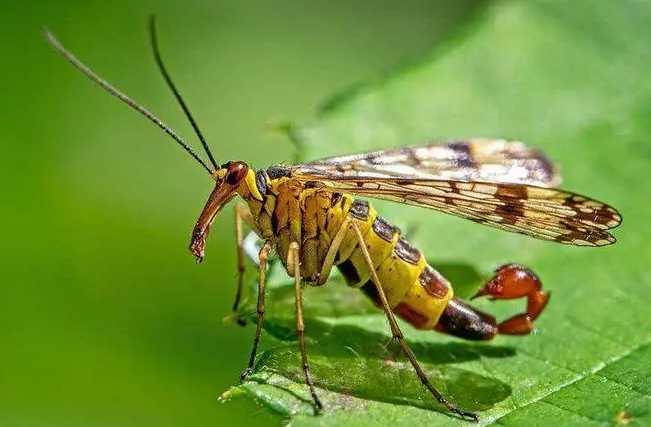
In forests and meadows worldwide, scorpionflies (order Mecoptera) perplex onlookers with a curious feature: a tail that resembles a scorpion’s stinger, but serves an entirely different purpose. Contrary to appearances, this bulbous, curved appendage at the insect’s rear is not a venomous weapon—but rather the male’s elaborate genitalia, a bizarre evolutionary trait that has fascinated entomologists for centuries.


A Misleading Appendage: Form vs. Function
The male scorpionfly’s "tail" is actually an enlarged, segmented abdomen modified into a clasping organ used during mating. Resembling a scorpion’s stinger in shape and positioning, it can curl upward in a threatening pose, yet lacks any venom glands or piercing ability. This mimicry is thought to deter predators, as the illusion of a scorpion’s sting may dissuade birds or small mammals from attacking. Females, meanwhile, have straight, unspecialized abdomens, highlighting the dramatic sexual dimorphism in the species. Despite their intimidating appearance, scorpionflies are harmless to humans, feeding primarily on decaying plant matter, small insects, and even carrion.


Behavior and Evolutionary Significance
Scorpionflies are named for their scorpion-like tail and fly-like wings, which fold over their bodies at rest. During courtship, males use their genitalic "tail" to grasp females, while some species offer nuptial gifts of saliva or prey to attract mates—a behavior rare in insects. Their unique morphology provides insights into evolutionary biology, as the scorpion tail mimicry exemplifies how sexual selection and predator avoidance can shape bizarre traits. Found in temperate regions, they play a role in ecosystems as decomposers and pollinators, though their secretive nature makes them easy to overlook.


For researchers, scorpionflies serve as a reminder that nature’s designs often prioritize survival and reproduction over straightforward functionality. Their deceptive "stinger" proves that in the insect world, even the most fearsome-looking features may hide a surprising purpose. As these quirky insects flutter through the underbrush, their existence challenges our assumptions—showing that sometimes, the most intimidating appendages are anything but weapons.

Latest Stories
Entertainment News1 minute readAnya Taylor-Joy, born April 16, 1996, in Miami, Florida, holds U.S., British, and Argentine citizenship—a global background that mirrors her ability to inhabit diverse roles across film and television.
Animal Information1 minute readThe Atossa fritillary (Speyeria adiaste atossa), a butterfly once common in Southern California’s mountain regions, is feared extinct, with no confirmed sightings since 1959. Characterized by its broad wings decorated with elegant black spots, the species once thrived across the area’s rugged landscapes.
Entertainment News1 minute readMargot Robbie, the Australian actress, ranked 7th in FHM’s 2015 “World’s Sexiest Women” list, a testament to her striking allure that complements her dynamic career.
Sports News1 minute readWith the 2026 Milano Cortina Winter Olympics approaching, full schedules for Winter Sports World Cups and qualifying events are now available. The newly updated Sports Observer calendar includes 699 exclusive events for 2025 and 2026, plus select major competitions through 2034, serving as a key resource for athletes and fans.
Animal Information1 minute readRed foxes, scientifically known as Vulpes vulpes, are among the most widespread and adaptable carnivores on Earth, thriving across diverse habitats from the frozen tundras of the Arctic to the bustling outskirts of urban centers. Their iconic rusty-red coat, white underbelly, and bushy tail—often tipped with white—make them easily distinguishable, while their pointed ears and sharp snouts reflect their keen senses, critical for survival.
Sports News2 minute readThe International Olympic Committee (IOC) has announced the selection of seven research projects for the 11th edition of the Advanced Olympic Research Grant Programme, which is managed by the IOC’s Olympic Studies Centre (OSC). The chosen projects were selected for their academic quality and relevance to the IOC’s defined priority research areas for the Olympic Movement.
Social News1 minute readMyanmar, in Southeast Asia, evokes images of illicit activities like fraud and organ trafficking for many. Yet behind this grim reputation lies a land of immense potential: 680,000 square kilometers of diverse terrain—mountains, plateaus, and river deltas—fringed by 3,200 km of coastline, with the famed Golden Triangle within its borders.