The Blobfish: Deep-Sea Oddity Named World’s Ugliest Animal


Animal Information
The Blobfish: Deep-Sea Oddity Named World’s Ugliest Animal

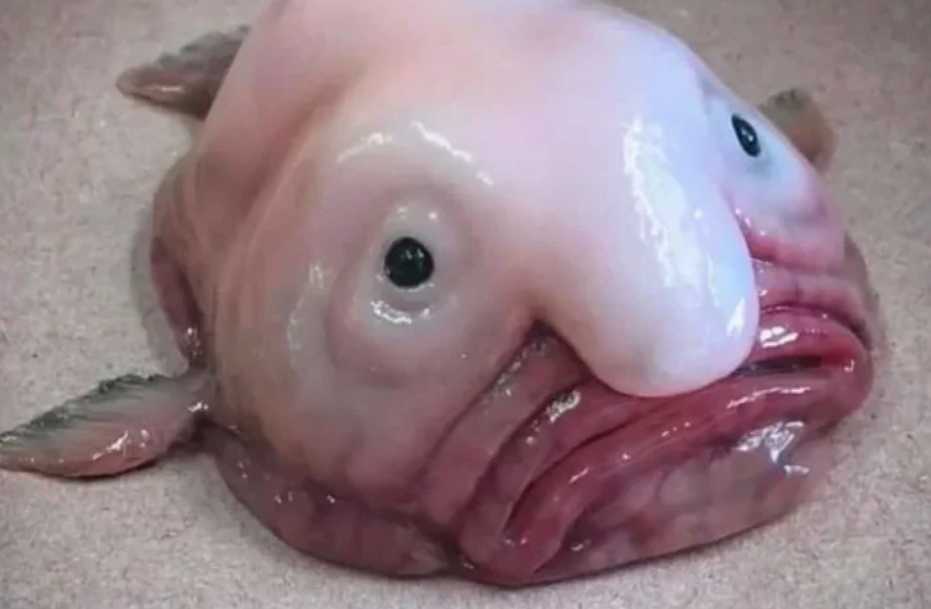
Scientifically known as Psychrolutes marcidus, the blobfish inhabits 600–1,200m deep-sea waters, measuring 30–38 cm in length. This gelatinous creature lacks bones and muscles, with a body density slightly lower than water—enabling it to float passively while capturing prey.


When dragged to the surface, drastic pressure changes cause its body to "melt" into a sagging mass, accentuating a drooping nose and mouth that form a perpetually "sad face." This grotesque appearance earned it the title of "World’s Ugliest Animal" in a 2013 public vote. "It’s an evolutionary marvel disguised as a caricature," says marine biologist Dr. Alan Jamieson. "Their gelatinous structure is a masterstroke for surviving extreme depths, but on land, it becomes a comical mess."


Native to abyssal regions off Australia and New Zealand, the blobfish’s unique physiology conserves energy in harsh environments. Though rarely seen alive, its viral "ugly" reputation has paradoxically raised awareness about deep-sea conservation. "What we deem 'ugly' is nature’s solution to surviving 1,000 meters below," notes ecologist Dr. Maria Byford. "This gelatinous 'sad sack' may be the ocean’s oddest ambassador—reminding us how little we understand of life in the deep."
Latest Stories
Entertainment News1 minute readIndie favorite Kristen Stewart, known for collaborations with Kelly Reichardt and Olivier Assayas, steps behind the camera for The Chronology of Water, premiering in Un Certain Regard. Adapted from Lydia Yuknavitch’s memoir, the film has earned early acclaim.
Travel News2 minute readNestled in the Vosges Mountains of Haute-Saône, France, the Plateau des Mille Etangs (Thousand Ponds Plateau) is emerging as a top destination for discerning hikers. Shaped by glaciers and human history, this 220 km² region boasts a surreal landscape of lakes, forests, and peat bogs, earning it the nickname "Little Finland" .
Animal Information1 minute readThe four-eyed turtle (Sacalia quadriocellata), a rare freshwater reptile native to Southeast Asia, has captured global attention for its distinctive appearance and critical endangered status. Contrary to its common name, this small turtle—typically measuring under 20 centimeters in length—possesses only two functional eyes. Its moniker derives from four striking ocelli (eye-like spots) atop its head: two pairs of bright yellow markings ringed with dark pigment, resembling additional eyes and forming one of nature’s most intriguing examples of mimicry.
Animal Information1 minute readWELLINGTON, July 17 (Xinhua) -- The Okarito brown kiwi (Apteryx rowi), a flightless bird endemic to New Zealand, is teetering on the brink of a growing survival crisis. Classified as "Vulnerable" by the International Union for Conservation of Nature (IUCN), this unique species is grappling with relentless threats from invasive predators like stoats, which have wreaked havoc on their nests and chicks, putting the entire population at risk.
Sports News1 minute readThe International Council of Arbitration for Sport (ICAS) released its 2024 financial statements, clarifying a frequently asked question: How much of the Court of Arbitration for Sport (CAS) funding comes from the IOC? Total operating revenue reached 24.15 million Swiss francs (CHF) (1 CHF = 1.26 USD), with a clear breakdown of sources.
Sports News1 minute readThe Scalo Romana Olympic Village is set to welcome athletes for this winter’s games, having been completed in 900 days—one month ahead of schedule, according to Designboom. The milestone marks a key step in preparations for the Milano Cortina 2026 Winter Olympics.
Industry News1 minute readThe global toy market is poised for steady growth, projected to rise from $316.14 billion in 2024 to $445.97 billion by 2032, at a compound annual growth rate (CAGR) of 4.33%, according to latest insights.