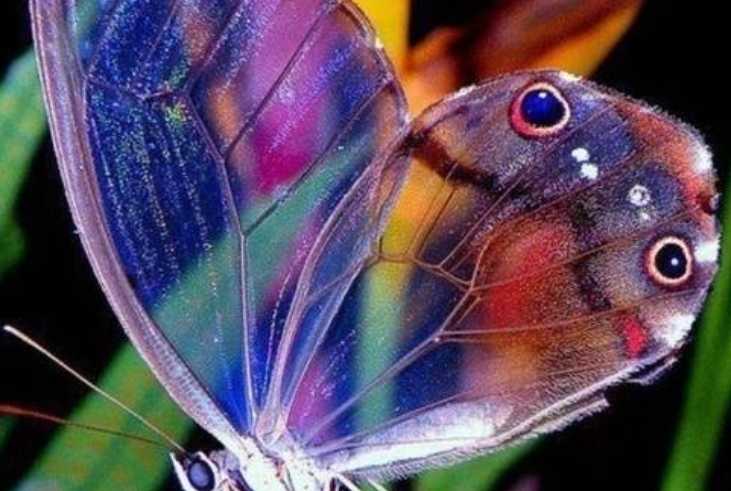
The Glasswing Butterfly: Nature’s Transparent Wonder with a Survival Strategy


Animal Information
The Glasswing Butterfly: Nature’s Transparent Wonder with a Survival Strategy

Native to the tropical rainforests of Central and South America, the glasswing butterfly (Greta oto) has captivated scientists and nature enthusiasts with its most iconic feature—wings so transparent they appear nearly invisible in flight. This remarkable adaptation allows it to vanish mid-air, making it a living example of nature’s evolutionary ingenuity.

Transparency as Camouflage: Physical Adaptations

The glasswing’s wings lack the colored scales found in most butterflies, instead featuring a membrane of clear chitin with tiny, irregular nanostructures that scatter light minimally. This creates a glass-like effect, allowing the butterfly to blend into sunlit foliage or disappear against the sky. Bordered by dark, reddish-brown veins, the wings span 5–6 cm, with the body sporting a fuzzy, brownish hue. Unlike other butterflies, it relies on transparency rather than bright colors for defense, a strategy that thrives in its dense forest habitat where predators like birds struggle to spot moving glassy wings.

Life Cycle and Ecological Role

Caterpillars of the glasswing butterfly feed on toxic plants in the nightshade family, absorbing compounds that make them unpalatable to predators—a trait retained in adulthood. Adults nectar on flowers like Lantana, aiding in pollination while using their transparent wings to navigate between blooms undetected. They are most active during the day, fluttering slowly to minimize wing movement and maintain invisibility. Though not currently endangered, their rainforest habitat faces threats from deforestation and climate change, which could disrupt their delicate life cycle.

Scientific Inspiration and Cultural Significance

The glasswing’s transparent wings have inspired materials science, with researchers studying their nanostructures to develop anti-reflective coatings for solar panels and electronics. In Central American folklore, the butterfly is often seen as a symbol of transformation and adaptability. Today, it serves as a flagship species for rainforest conservation, reminding humanity of the countless unique creatures that rely on intact ecosystems for survival—creatures whose beauty lies not in opulence, but in the elegant simplicity of evolutionary design.
Latest Stories
Entertainment News1 minute readAnya Taylor-Joy, born April 16, 1996, in Miami, Florida, holds U.S., British, and Argentine citizenship—a global background that mirrors her ability to inhabit diverse roles across film and television.
Animal Information1 minute readThe Atossa fritillary (Speyeria adiaste atossa), a butterfly once common in Southern California’s mountain regions, is feared extinct, with no confirmed sightings since 1959. Characterized by its broad wings decorated with elegant black spots, the species once thrived across the area’s rugged landscapes.
Entertainment News1 minute readMargot Robbie, the Australian actress, ranked 7th in FHM’s 2015 “World’s Sexiest Women” list, a testament to her striking allure that complements her dynamic career.
Sports News1 minute readWith the 2026 Milano Cortina Winter Olympics approaching, full schedules for Winter Sports World Cups and qualifying events are now available. The newly updated Sports Observer calendar includes 699 exclusive events for 2025 and 2026, plus select major competitions through 2034, serving as a key resource for athletes and fans.
Animal Information1 minute readRed foxes, scientifically known as Vulpes vulpes, are among the most widespread and adaptable carnivores on Earth, thriving across diverse habitats from the frozen tundras of the Arctic to the bustling outskirts of urban centers. Their iconic rusty-red coat, white underbelly, and bushy tail—often tipped with white—make them easily distinguishable, while their pointed ears and sharp snouts reflect their keen senses, critical for survival.
Sports News2 minute readThe International Olympic Committee (IOC) has announced the selection of seven research projects for the 11th edition of the Advanced Olympic Research Grant Programme, which is managed by the IOC’s Olympic Studies Centre (OSC). The chosen projects were selected for their academic quality and relevance to the IOC’s defined priority research areas for the Olympic Movement.
Social News1 minute readMyanmar, in Southeast Asia, evokes images of illicit activities like fraud and organ trafficking for many. Yet behind this grim reputation lies a land of immense potential: 680,000 square kilometers of diverse terrain—mountains, plateaus, and river deltas—fringed by 3,200 km of coastline, with the famed Golden Triangle within its borders.