The Japanese Rhinoceros Beetle (Allomyrina dichotoma): A Horned Symbol of Strength and Nature's Engineer


Insect Information
The Japanese Rhinoceros Beetle (Allomyrina dichotoma): A Horned Symbol of Strength and Nature's Engineer

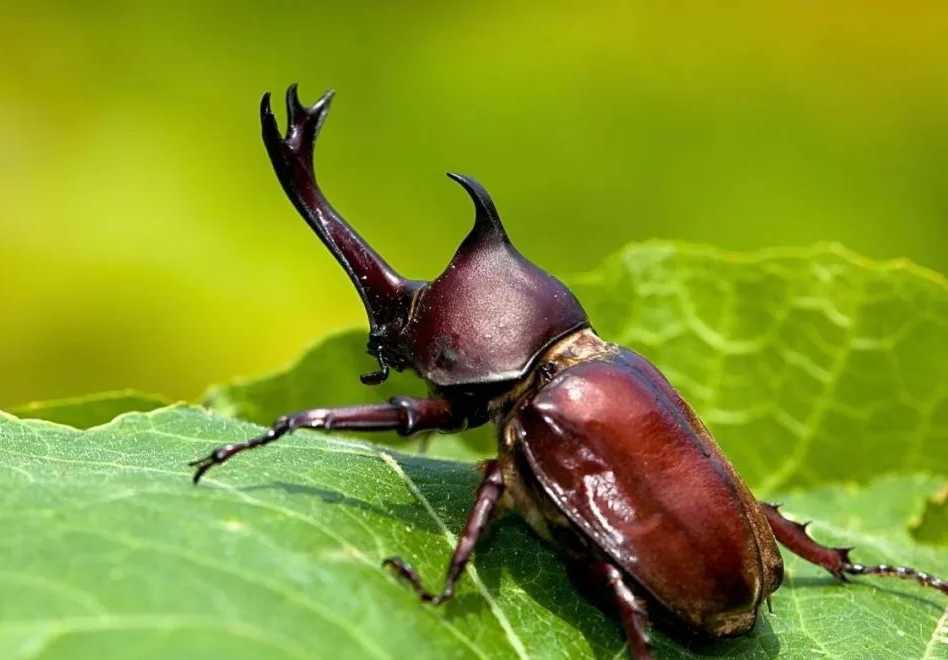
The Japanese rhinoceros beetle, scientifically known as Allomyrina dichotoma, is an iconic insect revered for its distinctive Y-shaped horn and deep cultural significance in Japan. Measuring 3–5 centimeters in length, this scarab beetle captivates with its robust build and unique morphology, while its larval stage plays a crucial role in forest ecosystems as a decomposer.


Morphology and Ecological Role
Males sport a prominent Y-shaped horn on the head, used in ritual combat over mates, while females lack this structure but possess powerful mandibles for egg-laying. The beetle’s glossy, dark exoskeleton contrasts with the larva’s creamy white, C-shaped body, which thrives in humus-rich soil and decaying wood. Larvae feed on decomposing plant matter, accelerating the breakdown of organic materials and enhancing soil nitrogen cycling—earning them the title of "soil cleaners." This ecological service supports microbial activity and forest health, underscoring their role as nature’s silent engineers.


Cultural Significance: From Samurai to Pop Culture
In Japan, the beetle has been a symbol of strength and longevity for centuries. During the Edo period, samurai helmets often featured carvings of its horn, embodying martial prowess. Today, it remains a cultural icon: as a popular pet in beetle-keeping hobbies, a motif in traditional art, and even the inspiration for Heracross in Pokémon, whose move "Super Horn" pays homage to the beetle’s combat prowess. It is also seen as a lucky charm, with its association with perseverance and vitality making it a mascot in festivals and commercial designs.


Natural History and Conservation
Native to East Asia, Allomyrina dichotoma thrives in deciduous forests, where adults feed on tree sap and fruit. Their life cycle—from humus-dwelling larva to horned adult—reflects nature’s balance between destruction and renewal. While not endangered, habitat loss and pesticide use threaten local populations, prompting conservation efforts to protect their forest habitats. For the Japanese, this beetle is more than an insect; it is a living symbol of resilience, a bridge between ancient traditions and modern ecology, and a reminder of the intricate bond between culture and the natural world.
Latest Stories
Industry News1 minute readTikTok Shop’s US mid-year promotion has kicked off with a historic first-week performance, breaking records across multiple business models and product categories, according to updates on July 18.
Industry News1 minute readRecent leaked reports suggest that Apple's upcoming ultra-thin iPhone 17 Air will be equipped with a battery capacity of approximately 2,800 mAh, a figure that not only falls below the industry-standard 3,000 mAh threshold but also smaller than the battery capacities of all models in the current iPhone 16 series.
Industry News1 minute readThe Office of the United States Trade Representative (USTR) announced the initiation of a Section 301 investigation into Brazil. The probe will examine whether Brazil’s policies and practices in areas such as digital trade, electronic payment services, "unfair" preferential tariffs, intellectual property protection, ethanol market access, and deforestation-related measures negatively impact U.S. trade interests.
Animal Information2 minute readIn the arid semi-deserts of the Horn of Africa lives an elegant and resilient creature—the Somali wild ass (Equus africanus somaliensis). As one of the wild ancestors of modern domestic donkeys, they once thrived in the dry grasslands and hills of Ethiopia, Eritrea, and Somalia. However, a combination of climate change, habitat loss, and human activities is pushing this species to the brink of extinction.
Entertainment News1 minute readIndie favorite Kristen Stewart, known for collaborations with Kelly Reichardt and Olivier Assayas, steps behind the camera for The Chronology of Water, premiering in Un Certain Regard. Adapted from Lydia Yuknavitch’s memoir, the film has earned early acclaim.
Entertainment News1 minute readAishwarya Rai, often called India’s “eternal beauty,” is a former Miss World whose allure has transcended decades, making her one of India’s most beloved and influential celebrities.
Travel News2 minute readPerched above the rolling vineyards of Solutré-Pouilly in southern Burgundy, France, the Roche de Solutré stands as a testament to nature’s artistry and humanity’s ancient legacy. This 493-meter limestone monolith, designated a "Grand Site de France," dominates the landscape with its dramatic cliffs, while its slopes cradle some of Burgundy’s most revered vineyards.