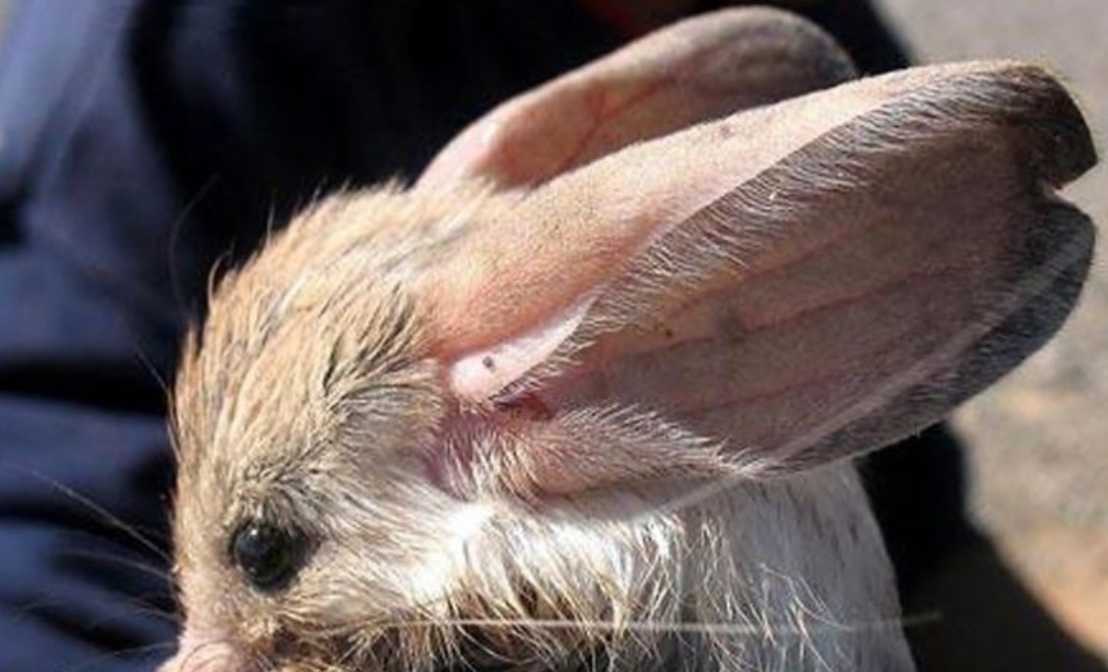
The Long-Eared Jerboa: A Desert Dweller with Ears Larger Than Its Body


Animal Information
The Long-Eared Jerboa: A Desert Dweller with Ears Larger Than Its Body

Native to the arid deserts of Mongolia and northern China, the long-eared jerboa (Euchoreutes naso) defies expectations with its disproportionately giant ears, which can reach up to 6 centimeters—longer than its entire head and body combined. This mouse-sized rodent, adapted to survive in harsh desert environments, has captivated scientists and animal enthusiasts alike with its bizarre appearance and unique behavioral traits.


A Tiny Body with Giant Ears: Adaptations for Survival

The long-eared jerboa’s most striking feature is its oversized ears, which serve a dual purpose: they enhance hearing to detect predators and prey in the desert silence, while also radiating body heat to keep the rodent cool in scorching temperatures. Weighing just 30–40 grams and measuring 7–9 centimeters in length, it has long hind legs adapted for bipedal hopping, allowing it to navigate sandy dunes with the agility of a miniature kangaroo. Its soft, sandy-colored fur provides camouflage against desert sands, while a tufted tail helps with balance during its rapid jumps. Nocturnal by nature, it spends the day in burrows to avoid extreme heat, emerging at night to forage for insects like beetles and grasshoppers.

Vulnerable Existence in a Harsh Habitat

Endemic to the Gobi and Taklamakan Deserts, the long-eared jerboa faces significant threats from habitat degradation and climate change. Mining, agriculture, and infrastructure development fragment its desert home, while droughts and shifting sand dunes disrupt its food sources. Listed as "Data Deficient" by the IUCN, little is known about its population size, but scientists believe it may be declining due to human activities. Conservation efforts focus on studying its ecology and raising awareness about the importance of desert ecosystems, which are often overlooked in biodiversity protection initiatives.


The long-eared jerboa’s existence in one of the world’s harshest environments highlights nature’s extraordinary ability to craft specialized adaptations. Its giant ears and hopping gait, evolved over millennia, serve as a testament to the resilience of life in extreme conditions. As climate change and human expansion threaten its desert home, this tiny rodent with disproportionately large ears stands as a symbol of the fragile balance between adaptation and survival in Earth’s most unforgiving landscapes.
Latest Stories
Entertainment News1 minute readAnya Taylor-Joy, born April 16, 1996, in Miami, Florida, holds U.S., British, and Argentine citizenship—a global background that mirrors her ability to inhabit diverse roles across film and television.
Animal Information1 minute readThe Atossa fritillary (Speyeria adiaste atossa), a butterfly once common in Southern California’s mountain regions, is feared extinct, with no confirmed sightings since 1959. Characterized by its broad wings decorated with elegant black spots, the species once thrived across the area’s rugged landscapes.
Entertainment News1 minute readMargot Robbie, the Australian actress, ranked 7th in FHM’s 2015 “World’s Sexiest Women” list, a testament to her striking allure that complements her dynamic career.
Sports News1 minute readWith the 2026 Milano Cortina Winter Olympics approaching, full schedules for Winter Sports World Cups and qualifying events are now available. The newly updated Sports Observer calendar includes 699 exclusive events for 2025 and 2026, plus select major competitions through 2034, serving as a key resource for athletes and fans.
Animal Information1 minute readRed foxes, scientifically known as Vulpes vulpes, are among the most widespread and adaptable carnivores on Earth, thriving across diverse habitats from the frozen tundras of the Arctic to the bustling outskirts of urban centers. Their iconic rusty-red coat, white underbelly, and bushy tail—often tipped with white—make them easily distinguishable, while their pointed ears and sharp snouts reflect their keen senses, critical for survival.
Sports News2 minute readThe International Olympic Committee (IOC) has announced the selection of seven research projects for the 11th edition of the Advanced Olympic Research Grant Programme, which is managed by the IOC’s Olympic Studies Centre (OSC). The chosen projects were selected for their academic quality and relevance to the IOC’s defined priority research areas for the Olympic Movement.
Social News1 minute readMyanmar, in Southeast Asia, evokes images of illicit activities like fraud and organ trafficking for many. Yet behind this grim reputation lies a land of immense potential: 680,000 square kilometers of diverse terrain—mountains, plateaus, and river deltas—fringed by 3,200 km of coastline, with the famed Golden Triangle within its borders.