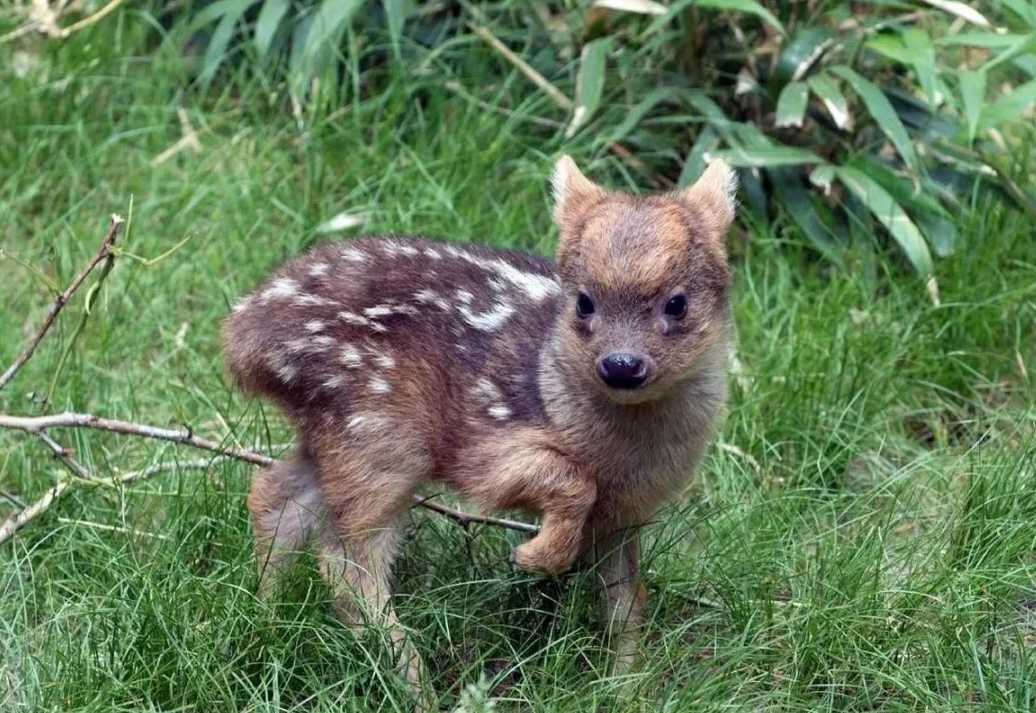
Holding the title of Earth’s smallest deer, the pudu (Pudu pudu and Pudu mephistophiles) enchants biologists with its miniature stature—standing just 30 to 40 centimeters tall as an adult. Native to the Andean forests of Chile and Argentina, this deer species defies expectations with its rabbit-like size, short tail, and endearing appearance, thriving in dense undergrowth where larger ungulates cannot venture.
-
Diminutive Dimensions and Camouflage
The pudu’s compact body (weighing 8–10 kg) is covered in thick, reddish-brown fur, ideal for blending into Andean shrublands. Its short tail and rounded ears reduce visibility, while specialized hooves with sharp edges allow nimble navigation through rocky terrain and tangled vegetation. Unlike larger deer, it lacks prominent antlers; males instead have small, spiky tusks used in territorial disputes.
-
Nocturnal Habits and Dietary Specialization
Primarily nocturnal, the pudu feeds on leaves, bark, and berries, using its prehensile upper lip to grasp vegetation. Its digestive system is adapted to process tough plant fibers, while a unique nasal structure helps filter cold mountain air. During the day, it shelters in thickets, relying on stealth rather than speed to evade predators like pumas and foxes.
-
Threats and Conservation Status
Both pudu species face significant risks: Pudu pudu is listed as "Vulnerable," while Pudu mephistophiles is "Endangered" due to deforestation, agriculture, and invasive species. Their limited range and low reproductive rate (females give birth to one fawn annually) compound population decline. Climate change also threatens their habitat, as rising temperatures alter Andean vegetation patterns.
-
Efforts to Protect the Tiny Giant
Conservation initiatives in Chile’s Nahuelbuta National Park and Argentina’s Lanín National Park focus on habitat restoration and anti-poaching patrols. Captive breeding programs in zoos have seen success, with reintroduced individuals aiding wild populations. Local communities play a key role in monitoring pudu sightings, turning ecological stewardship into a cultural priority.
As keystone species, pudus disperse seeds and shape forest ecosystems through browsing. Their presence indicates a healthy Andean habitat, making them vital indicators for conservationists. In Mapuche culture, the pudu is revered as a symbol of resilience in harsh mountain environments, featured in traditional stories that emphasize coexistence with nature.
In the misty Andean forests, the pudu stands as a living testament to evolutionary adaptation. Its tiny form, perfected over millennia to conquer rugged terrain, reminds humanity that biodiversity’s most precious gems often come in the smallest packages—and that protecting these miniature marvels is crucial to preserving Earth’s ecological tapestry.