The Alarming Decline of Monarch Butterflies: A North American Icon at Risk


Insect Information
The Alarming Decline of Monarch Butterflies: A North American Icon at Risk

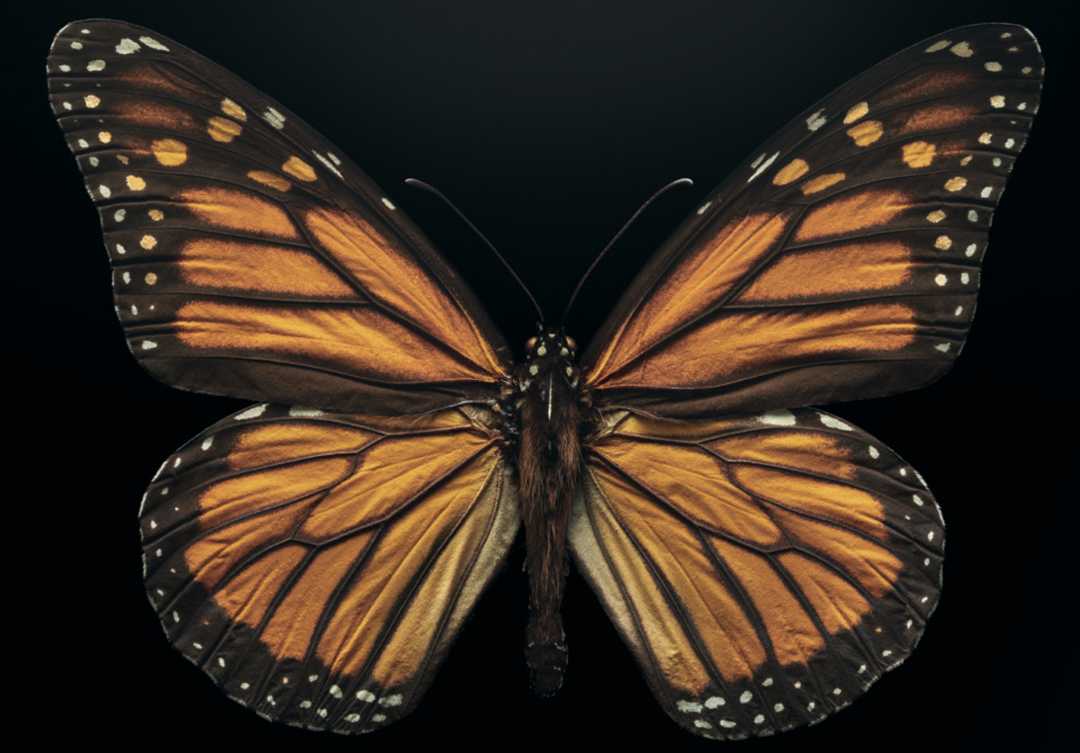
The Monarch butterfly (Danaus plexippus), once a beloved and iconic insect across North America, has been experiencing a continuous and distressing decline in population over recent decades, yet still awaits formal protection. This species, renowned for its spectacular long - distance migrations, has captured the hearts of people with its bright orange and black wings.


In their overwintering grounds, both in Mexico for the eastern population and in California, USA for the western population, Monarch butterflies are closely monitored and studied. However, the numbers of these butterflies have been plummeting. In Mexico, the eastern population, which congregates in the oyamel fir forests, has seen a drastic reduction. From 1996 - 2014, the eastern population declined by a staggering 84%. The butterflies' overwintering sites in Mexico are crucial, but they are under threat from illegal logging and deforestation, which destroy the forests where the Monarchs roost.


The situation is even more dire for the western population in California. Their numbers have dropped by a heart - wrenching 99.9% since the 1980s, with less than 1914 individuals recorded in the winter of 2020 - 2021. Once, millions of western Monarchs would gather along the California coast, but now, their presence is a rare sight. Pesticide and herbicide use in their breeding and migration areas is a major culprit. These chemicals kill not only the Monarchs themselves but also the milkweed plants, which are essential for the survival of Monarch caterpillars as their sole food source. Additionally, climate change has led to more extreme weather events, such as droughts, wildfires, and intense storms, which disrupt the Monarchs' life cycle and migration patterns. Despite their significant decline, the Monarch butterfly has yet to receive the formal protection it so urgently needs to reverse its downward population trend.

Latest Stories
Industry News1 minute readTikTok Shop’s US mid-year promotion has kicked off with a historic first-week performance, breaking records across multiple business models and product categories, according to updates on July 18.
Industry News1 minute readRecent leaked reports suggest that Apple's upcoming ultra-thin iPhone 17 Air will be equipped with a battery capacity of approximately 2,800 mAh, a figure that not only falls below the industry-standard 3,000 mAh threshold but also smaller than the battery capacities of all models in the current iPhone 16 series.
Industry News1 minute readThe Office of the United States Trade Representative (USTR) announced the initiation of a Section 301 investigation into Brazil. The probe will examine whether Brazil’s policies and practices in areas such as digital trade, electronic payment services, "unfair" preferential tariffs, intellectual property protection, ethanol market access, and deforestation-related measures negatively impact U.S. trade interests.
Animal Information2 minute readIn the arid semi-deserts of the Horn of Africa lives an elegant and resilient creature—the Somali wild ass (Equus africanus somaliensis). As one of the wild ancestors of modern domestic donkeys, they once thrived in the dry grasslands and hills of Ethiopia, Eritrea, and Somalia. However, a combination of climate change, habitat loss, and human activities is pushing this species to the brink of extinction.
Entertainment News1 minute readIndie favorite Kristen Stewart, known for collaborations with Kelly Reichardt and Olivier Assayas, steps behind the camera for The Chronology of Water, premiering in Un Certain Regard. Adapted from Lydia Yuknavitch’s memoir, the film has earned early acclaim.
Entertainment News1 minute readAishwarya Rai, often called India’s “eternal beauty,” is a former Miss World whose allure has transcended decades, making her one of India’s most beloved and influential celebrities.
Travel News2 minute readPerched above the rolling vineyards of Solutré-Pouilly in southern Burgundy, France, the Roche de Solutré stands as a testament to nature’s artistry and humanity’s ancient legacy. This 493-meter limestone monolith, designated a "Grand Site de France," dominates the landscape with its dramatic cliffs, while its slopes cradle some of Burgundy’s most revered vineyards.