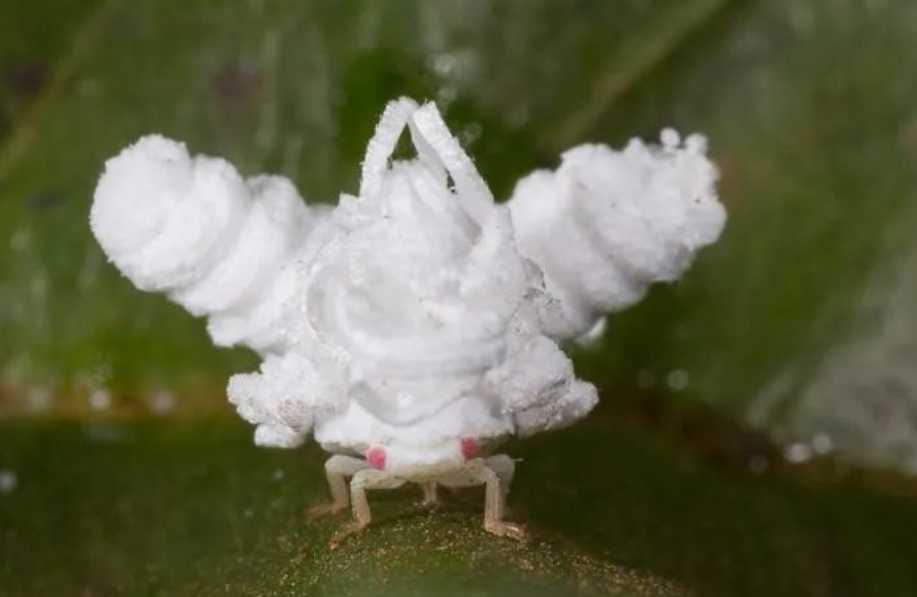
The Wasp Mantisfly: A Hybrid Predator That's Neither Mantis Nor Wasp


Insect Information
The Wasp Mantisfly: A Hybrid Predator That's Neither Mantis Nor Wasp

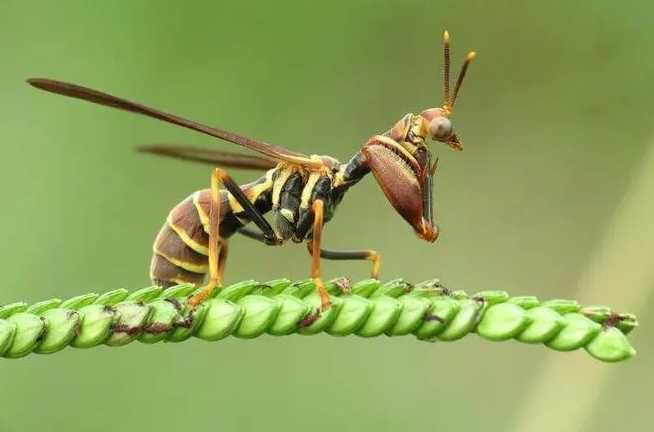
In the tropical and subtropical regions of the world, the wasp mantisfly (Climaciella brunnea) perplexes observers with its split identity: the front half resembles a praying mantis, while the rear mimics a wasp. This insect, part of the family Mantispidae, is a master of evolutionary mimicry, blending features of two fearsome species to create a creature that defies easy classification.


A Dual Identity for Survival
The mantisfly’s head and thorax are almost identical to those of a mantis, complete with triangular head, bulging compound eyes, and raptorial forelegs adapted for seizing prey. These front legs, often held in the classic "praying" pose, allow it to ambush small insects with the same precision as its namesake. The abdomen, however, tells a different story: it narrows into a wasp-like waist and sports yellow and black striped patterns, mimicking the aposematic coloration of stinging wasps. This dual mimicry serves a twofold purpose: the mantis-like front scares off prey, while the wasp-like rear wards off predators, who avoid the perceived threat of a venomous sting.


A Unique Life Cycle and Ecological Niche
Despite its intimidating appearance, the mantisfly is harmless to humans, lacking both the mantis’ powerful bite and the wasp’s stinger. As larvae, they are parasitic, hitching rides on spiders to infiltrate their egg sacs and feed on developing spiderlings—a strategy that sets them apart from both mantises and wasps. Adults feed on nectar and small insects, using their mantis-like legs to capture prey. Found in regions like North America and Southeast Asia, they thrive in gardens and wooded areas, where their hybrid appearance allows them to blend into both predator and prey communities.


For entomologists, the wasp mantisfly is a textbook example of batesian mimicry and convergent evolution, where unrelated species develop similar traits for survival. Its existence challenges our assumptions about insect classifications, proving that nature often prioritizes function over taxonomy. As this strange hybrid flutters between flowers, its mismatched body serves as a reminder that in the animal kingdom, the most effective survival strategies often emerge from the unlikeliest combinations.

Latest Stories
Entertainment News1 minute readAnya Taylor-Joy, born April 16, 1996, in Miami, Florida, holds U.S., British, and Argentine citizenship—a global background that mirrors her ability to inhabit diverse roles across film and television.
Animal Information1 minute readThe Atossa fritillary (Speyeria adiaste atossa), a butterfly once common in Southern California’s mountain regions, is feared extinct, with no confirmed sightings since 1959. Characterized by its broad wings decorated with elegant black spots, the species once thrived across the area’s rugged landscapes.
Entertainment News1 minute readMargot Robbie, the Australian actress, ranked 7th in FHM’s 2015 “World’s Sexiest Women” list, a testament to her striking allure that complements her dynamic career.
Sports News1 minute readWith the 2026 Milano Cortina Winter Olympics approaching, full schedules for Winter Sports World Cups and qualifying events are now available. The newly updated Sports Observer calendar includes 699 exclusive events for 2025 and 2026, plus select major competitions through 2034, serving as a key resource for athletes and fans.
Animal Information1 minute readRed foxes, scientifically known as Vulpes vulpes, are among the most widespread and adaptable carnivores on Earth, thriving across diverse habitats from the frozen tundras of the Arctic to the bustling outskirts of urban centers. Their iconic rusty-red coat, white underbelly, and bushy tail—often tipped with white—make them easily distinguishable, while their pointed ears and sharp snouts reflect their keen senses, critical for survival.
Sports News2 minute readThe International Olympic Committee (IOC) has announced the selection of seven research projects for the 11th edition of the Advanced Olympic Research Grant Programme, which is managed by the IOC’s Olympic Studies Centre (OSC). The chosen projects were selected for their academic quality and relevance to the IOC’s defined priority research areas for the Olympic Movement.
Social News1 minute readMyanmar, in Southeast Asia, evokes images of illicit activities like fraud and organ trafficking for many. Yet behind this grim reputation lies a land of immense potential: 680,000 square kilometers of diverse terrain—mountains, plateaus, and river deltas—fringed by 3,200 km of coastline, with the famed Golden Triangle within its borders.